In Balinese tradition, a person does not come into life as a blank slate. Birth brings a particular combination of calendar cycles, strengths, inner tensions, and the consequences of past karma.
A special ceremony known as Mbayuh, or Mebayuh Oton, is performed to work with this inheritance.
I went through this ritual myself with Ibu Jero. It was a deeply personal experience, unlike an ordinary meeting with a priestess or a melukat purification. A date was chosen especially for my Mbayuh, offerings were prepared, and the ceremony was connected to my own day of birth.
What does “birth karma” mean?
In the Balinese understanding, a birthday is more than a day and month. The wuku and the meeting of several calendar cycles are also taken into account. Their combination is believed to be reflected in a person’s character, recurring life situations, and vulnerable places.
Birth karma is not necessarily understood as a sentence. It is closer to something a person arrives with — something that can be recognised, softened, and brought back into balance.
As Ibu Jero explained it, Mbayuh works with an imbalance connected to the circumstances of birth. The ceremony is sometimes translated as a cleansing or symbolic “payment” of karmic debt. This is not a literal debt, nor a promise that destiny will change instantly.
You can discover the traditional calendar combination connected with your own birth in our Balinese birth-day calculator.
How is Mbayuh different from melukat?
Melukat is a purification ritual that can be performed for many different reasons. Mbayuh is more personal: its content, offerings, and date are connected with a particular person and their birth.
Purification with water may be part of the ceremony, but Mbayuh is broader. It includes prayers, the work of the priestess, special offerings, and ritual actions whose meaning is determined individually.
Why can’t any date be chosen?
Mbayuh is not simply scheduled for the next free day. The priestess determines a suitable date through the Balinese calendar, taking into account the person’s birth and the nature of the ceremony.
There may be only a few suitable dates. This is why the ritual is planned in advance. Ibu Jero first becomes familiar with the person’s situation and considers whether Mbayuh is appropriate; only then can the date and preparation be discussed.
My experience of Mbayuh
I will add to this section later: why Ibu Jero recommended Mbayuh to me, how I prepared, what happened during the ceremony, and what I felt afterwards. My photographs from the ritual will appear here too.
Not everything that happens during a ceremony needs to be translated into words or shown in photographs. Some parts remain personal. I want to tell this story carefully, without turning a spiritual experience into an exotic spectacle.
Can you go through Mbayuh with Ibu Jero?
Mbayuh is not necessary for everyone and is not automatically part of an ordinary meeting. The first step is to speak with Ibu Jero, explain your situation, and ask questions.
If the priestess sees a reason for the ceremony and the person wishes to continue, we can choose a date separately and discuss the preparation and offerings.
I can help organise the visit, accompany you, translate the conversation, and explain what is happening. You can read more about a personal meeting with Ibu Jero.
Mbayuh does not replace personal decisions and does not promise that every difficulty will disappear afterwards. It is a spiritual practice within the Balinese tradition: an opportunity to look more attentively at one’s life, undergo purification, and symbolically begin a new stage.
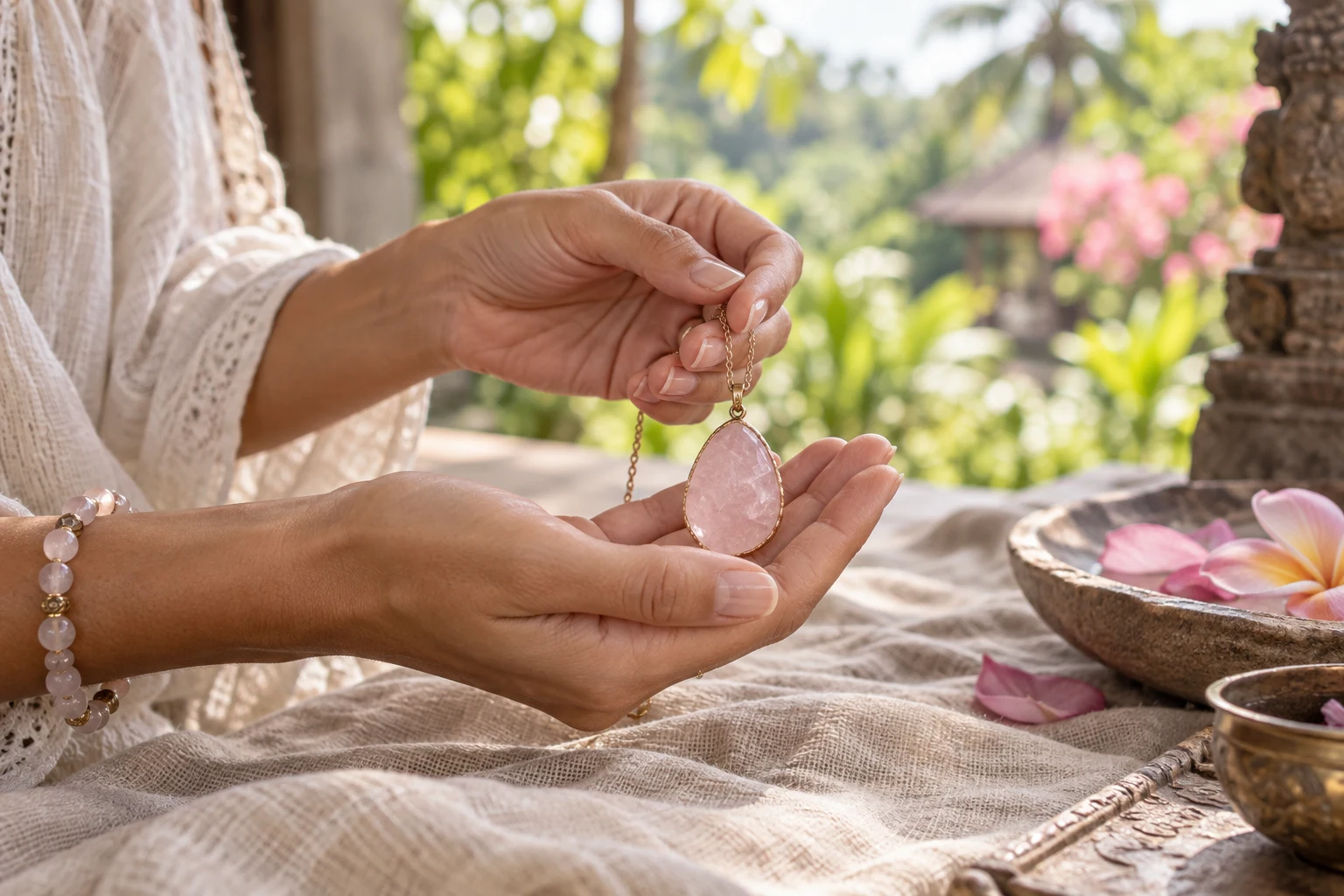
The ritual does not promise to fulfill a wish for you. The jewelry becomes a reminder of your intention, of what matters to you, and of what you want to return to.